Interview with Ching-Ching Lin, the New Social Media Manager for NYS TESOL!
Back to BlogInterview with Ching-Ching Lin, the New Social Media Manager for NYS TESOL!
03/17/2026
Conducted with Katie Leven, VP of Communications
KATIE:
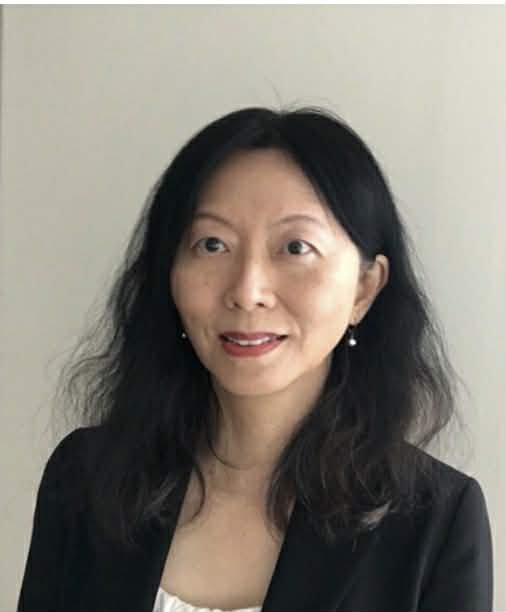
Today I’m sitting down with our New Social Media Manager for NYS TESOL, Ching-Ching Lin! She is a past president of NYS TESOL and very involved in the TESOL community! I look forward to getting to know you! Thank you for joining me in the hopes of better understanding your work and aspirations in this new role.
CHING-CHING:
I was just wondering ..you have done such a marvelous work with NYS TESOL’s social media. I noticed that you have posted something almost every day! I was wondering if you have thought about continuing? I am more than happy to step into the role and will be my honor to do so, but if you are able and interested in staying on, I truly think you should be the first choice. Of course, if you are ready to move on to other projects, I completely respect that as well. Just want to share this thought with you : )
KATIE:
Thank you for your kind words, but no thank you. I have really cut back my social media usage since last summer and would like to go back to that. But let’s switch our focus to you, can you tell me a little bit more about your background and what inspired you to step into the role of Social Media Manager for NYS TESOL and lead our digital outreach efforts?
CHING-CHING:
As a past NYS TESOL Executive Board member—and as a long-time, continuing member—I have always stayed closely connected to NYS TESOL’s news and social media presence. Even over the past two years, as my priorities shifted and I took on a broader leadership role with TESOL International, NYS TESOL has remained my home base. No matter what roles I assume, I see myself as part of this community. Our work must always be grounded in local relationships and meaningful community engagement.
I was surprised to learn that Bridgette would be stepping down. She has served NYS TESOL for more than five or six years and has done an extraordinary job. Much of the visibility and strong reputation NYS TESOL enjoys today, especially among other TESOL affiliates, is due in large part to her dedication and the instrumental role she has played in shaping and sustaining our social media presence.
It would be a shame to lose that momentum or visibility. If there is any way I can contribute to sustaining and strengthening that presence so that our community continues to have something vibrant and inspiring to look to, it would truly be my honor.
KATIE:
Thank you, Ching-Ching! I have to agree that Brigette did a wonderful job for so many years! We’re indebted to the connections she has helped us build. I know that’s why I stepped in to maintain our momentum. My next question for you is: What overarching vision guides the way you shape NYS TESOL’s social media presence, and how did that vision develop?
CHING-CHING:
As a staff member, my role is to support the vision of the current executive board. At the same time, I carry with me the reason I was drawn to become a NYS TESOL member in the first place. About ten years ago, I was feeling professionally disillusioned. I felt like all I was doing was jumping through bureaucratic hoops. I wanted to do something that I believe truly mattered, something impactful. I especially wanted to feel a more direct connection to the broader community and contribute in ways that were socially meaningful, especially in uplifting and centering the voices of minoritized communities. For me, it has always been about human-centered values that guide and drive my actions.
That was when I found NYS TESOL. Since then, it has been more than just a professional network for me. It has been a community where I found a sense of belonging. I truly consider NYS TESOL my professional home.
Executive boards come and go, and we trust the election process to bring in members who are dedicated to serving our community. What remains constant is our shared vision: that NYS TESOL serves as a strategy and a platform to uphold diversity, inclusion, and accountability. That vision is what binds us together.
This is also why our presence on social media matters. Many people don’t know what we do unless they see it there. Social media helps make our work visible. It fosters connection, builds community, and brings people together around our shared commitments.
KATIE:
Ching-Ching, I’m sure there are many members who feel NYS TESOL is a way to directly connect to a larger community. I’m so glad that you found that here too! It’s so true that without the social media aspect, no one would know what is going on in the organization and how valuable our membership is. How do you hope to strengthen NYS TESOL’s connection with educators, schools, and communities across the state through social media?
CHING-CHING:
In today’s social media era, I am very aware that people can easily scroll past posts mindlessly without really feeling any sense of belonging or community. Of course, it is important for us to share updates about our organization, our initiatives, and our work, especially things that are relevant to our members’ interests. But beyond posting information, we also have to think about meaningful engagement.
When everyone is using AI and automation, sometimes the messages we send can start to lose a bit of their humanity. I don’t claim to have all the answers. I am still figuring this out myself and, honestly, still struggling with social media in many ways. But I am aware of the challenge, and I want to keep striving to engage in a more human way.
Sometimes that means adding a personal perspective. It means letting people know there is a real person behind the post, someone who cares, someone who is passionate about the work. That passion is what drives the organization, and I think people can feel it when it is genuine.
The human factor matters. Vulnerability matters. We might worry about being too personal, but sometimes what feels personal is actually what connects us most powerfully.
And this isn’t just the responsibility of a social media manager. It is an organizational commitment. We should be creating content that restores and sustains our shared humanity—content that reflects who we are as a community. Keeping that shared humanity at the center is essential.
KATIE:
I love that! We’ve talked about forming a social media committee to help support your role. I also love your statement, “We should be creating content that restores and sustains our shared humanity.” It’s those positive connections that will bring forth a better world. What does equitable and inclusive social media outreach look like to you, and how do you ensure diverse voices and communities are represented?
CHING-CHING:
That is really a profound question, and I don’t want to just give a quick, ready made answer. I think part of our humility and integrity is admitting that we are still struggling with equity and inclusion. No organization has it all figured out, and we certainly don’t have all the answers.
Recently, what happened with our NYS TESOL social media structure really got me thinking and perhaps can provide us an important opportunity to rethink how we sustain our social media presence. As you know, we lost our Facebook page. I honestly don’t know exactly what happened behind the scenes. Brigitte reached out to me to see if I had any insight, but I didn’t. My understanding is that the page may have been tied to the original owner’s personal account, and if that person decided to leave or close it, the entire page would disappear with it. And that is perhaps what happened.
Now we have shifted to using a Facebook group. In some ways, a group can actually be more inclusive, depending on how it is set up. Almost anyone can post and contribute. I personally manage another professional Facebook group, and I don’t place many restrictions on posting. I allow people to share freely, and so far, no one has taken advantage of that openness.
A Facebook group can invite members to contribute their knowledge and resources, and this is incredibly valuable. It can be inspiring to see what others are doing. If managed thoughtfully, it can become a real space for community-building—not just a place where we post our own events, but where we also share initiatives from other organizations that align with our mission and values.
Of course, this is easier said than done. I have been active on social media since the pandemic—that was really when I began engaging more intentionally, because during COVID it felt like the only way to stay connected. Through those spaces, I have been able to build meaningful collaborative relationships with people from different parts of the world, and I am truly grateful for those connections and what they have made possible.
At the same time, I understand why people approach social media with caution. That hesitation is understandable. Most people don’t engage in social media consistently. So we can’t rely on social media alone to carry our mission of outreach, diversity, and inclusion. Much of that work still depends on grassroots efforts and genuine human connection.
But social media can still play an important role in shaping vision, sharing knowledge, and connecting people. Like many organizations, we need to keep rethinking what social media means in this era, especially its responsibility to truth, authenticity, and human connection. The question is not whether we use it, but how we use it: in ways that are intentional, inclusive, and grounded in our shared humanity.
KATIE:
Well, Ching-Ching, it sounds like you’re the right fit for this role! I was happy to help out in the short term, but your vision, history and perspective will serve our larger community well. Thank you so much for taking the time to talk with me! I wish you much success and will continue to support you as the Vice President of Communications! I know our entire Executive Board is thrilled to welcome you and see you lead us full charge ahead to elevate our multilingual learners of English! A little bit of knowledge about our children can shift how we plan and deliver instruction. You will be the conduit that will disseminate knowledge and opportunities. One little piece that will lead to a larger change for a better and brighter future for all learners, especially our multilingual learners of English.
Conducted with Katie Leven, VP of Communications
KATIE:
Today I’m sitting down with our New Social Media Manager for NYS TESOL, Ching-Ching Lin! She is a past president of NYS TESOL and very involved in the TESOL community! I look forward to getting to know you! Thank you for joining me in the hopes of better understanding your work and aspirations in this new role.
CHING-CHING:
I was just wondering ..you have done such a marvelous work with NYS TESOL’s social media. I noticed that you have posted something almost every day! I was wondering if you have thought about continuing? I am more than happy to step into the role and will be my honor to do so, but if you are able and interested in staying on, I truly think you should be the first choice. Of course, if you are ready to move on to other projects, I completely respect that as well. Just want to share this thought with you : )
KATIE:
Thank you for your kind words, but no thank you. I have really cut back my social media usage since last summer and would like to go back to that. But let’s switch our focus to you, can you tell me a little bit more about your background and what inspired you to step into the role of Social Media Manager for NYS TESOL and lead our digital outreach efforts?
CHING-CHING:
As a past NYS TESOL Executive Board member—and as a long-time, continuing member—I have always stayed closely connected to NYS TESOL’s news and social media presence. Even over the past two years, as my priorities shifted and I took on a broader leadership role with TESOL International, NYS TESOL has remained my home base. No matter what roles I assume, I see myself as part of this community. Our work must always be grounded in local relationships and meaningful community engagement.
I was surprised to learn that Bridgette would be stepping down. She has served NYS TESOL for more than five or six years and has done an extraordinary job. Much of the visibility and strong reputation NYS TESOL enjoys today, especially among other TESOL affiliates, is due in large part to her dedication and the instrumental role she has played in shaping and sustaining our social media presence.
It would be a shame to lose that momentum or visibility. If there is any way I can contribute to sustaining and strengthening that presence so that our community continues to have something vibrant and inspiring to look to, it would truly be my honor.
KATIE:
Thank you, Ching-Ching! I have to agree that Brigette did a wonderful job for so many years! We’re indebted to the connections she has helped us build. I know that’s why I stepped in to maintain our momentum. My next question for you is: What overarching vision guides the way you shape NYS TESOL’s social media presence, and how did that vision develop?
CHING-CHING:
As a staff member, my role is to support the vision of the current executive board. At the same time, I carry with me the reason I was drawn to become a NYS TESOL member in the first place. About ten years ago, I was feeling professionally disillusioned. I felt like all I was doing was jumping through bureaucratic hoops. I wanted to do something that I believe truly mattered, something impactful. I especially wanted to feel a more direct connection to the broader community and contribute in ways that were socially meaningful, especially in uplifting and centering the voices of minoritized communities. For me, it has always been about human-centered values that guide and drive my actions.
That was when I found NYS TESOL. Since then, it has been more than just a professional network for me. It has been a community where I found a sense of belonging. I truly consider NYS TESOL my professional home.
Executive boards come and go, and we trust the election process to bring in members who are dedicated to serving our community. What remains constant is our shared vision: that NYS TESOL serves as a strategy and a platform to uphold diversity, inclusion, and accountability. That vision is what binds us together.
This is also why our presence on social media matters. Many people don’t know what we do unless they see it there. Social media helps make our work visible. It fosters connection, builds community, and brings people together around our shared commitments.
KATIE:
Ching-Ching, I’m sure there are many members who feel NYS TESOL is a way to directly connect to a larger community. I’m so glad that you found that here too! It’s so true that without the social media aspect, no one would know what is going on in the organization and how valuable our membership is. How do you hope to strengthen NYS TESOL’s connection with educators, schools, and communities across the state through social media?
CHING-CHING:
In today’s social media era, I am very aware that people can easily scroll past posts mindlessly without really feeling any sense of belonging or community. Of course, it is important for us to share updates about our organization, our initiatives, and our work, especially things that are relevant to our members’ interests. But beyond posting information, we also have to think about meaningful engagement.
When everyone is using AI and automation, sometimes the messages we send can start to lose a bit of their humanity. I don’t claim to have all the answers. I am still figuring this out myself and, honestly, still struggling with social media in many ways. But I am aware of the challenge, and I want to keep striving to engage in a more human way.
Sometimes that means adding a personal perspective. It means letting people know there is a real person behind the post, someone who cares, someone who is passionate about the work. That passion is what drives the organization, and I think people can feel it when it is genuine.
The human factor matters. Vulnerability matters. We might worry about being too personal, but sometimes what feels personal is actually what connects us most powerfully.
And this isn’t just the responsibility of a social media manager. It is an organizational commitment. We should be creating content that restores and sustains our shared humanity—content that reflects who we are as a community. Keeping that shared humanity at the center is essential.
KATIE:
I love that! We’ve talked about forming a social media committee to help support your role. I also love your statement, “We should be creating content that restores and sustains our shared humanity.” It’s those positive connections that will bring forth a better world. What does equitable and inclusive social media outreach look like to you, and how do you ensure diverse voices and communities are represented?
CHING-CHING:
That is really a profound question, and I don’t want to just give a quick, ready made answer. I think part of our humility and integrity is admitting that we are still struggling with equity and inclusion. No organization has it all figured out, and we certainly don’t have all the answers.
Recently, what happened with our NYS TESOL social media structure really got me thinking and perhaps can provide us an important opportunity to rethink how we sustain our social media presence. As you know, we lost our Facebook page. I honestly don’t know exactly what happened behind the scenes. Brigitte reached out to me to see if I had any insight, but I didn’t. My understanding is that the page may have been tied to the original owner’s personal account, and if that person decided to leave or close it, the entire page would disappear with it. And that is perhaps what happened.
Now we have shifted to using a Facebook group. In some ways, a group can actually be more inclusive, depending on how it is set up. Almost anyone can post and contribute. I personally manage another professional Facebook group, and I don’t place many restrictions on posting. I allow people to share freely, and so far, no one has taken advantage of that openness.
A Facebook group can invite members to contribute their knowledge and resources, and this is incredibly valuable. It can be inspiring to see what others are doing. If managed thoughtfully, it can become a real space for community-building—not just a place where we post our own events, but where we also share initiatives from other organizations that align with our mission and values.
Of course, this is easier said than done. I have been active on social media since the pandemic—that was really when I began engaging more intentionally, because during COVID it felt like the only way to stay connected. Through those spaces, I have been able to build meaningful collaborative relationships with people from different parts of the world, and I am truly grateful for those connections and what they have made possible.
At the same time, I understand why people approach social media with caution. That hesitation is understandable. Most people don’t engage in social media consistently. So we can’t rely on social media alone to carry our mission of outreach, diversity, and inclusion. Much of that work still depends on grassroots efforts and genuine human connection.
But social media can still play an important role in shaping vision, sharing knowledge, and connecting people. Like many organizations, we need to keep rethinking what social media means in this era, especially its responsibility to truth, authenticity, and human connection. The question is not whether we use it, but how we use it: in ways that are intentional, inclusive, and grounded in our shared humanity.
KATIE:
Well, Ching-Ching, it sounds like you’re the right fit for this role! I was happy to help out in the short term, but your vision, history and perspective will serve our larger community well. Thank you so much for taking the time to talk with me! I wish you much success and will continue to support you as the Vice President of Communications! I know our entire Executive Board is thrilled to welcome you and see you lead us full charge ahead to elevate our multilingual learners of English! A little bit of knowledge about our children can shift how we plan and deliver instruction. You will be the conduit that will disseminate knowledge and opportunities. One little piece that will lead to a larger change for a better and brighter future for all learners, especially our multilingual learners of English.
Post a new comment