
Co-Teaching Models with the Secondary ENL SIG
Back to Blog 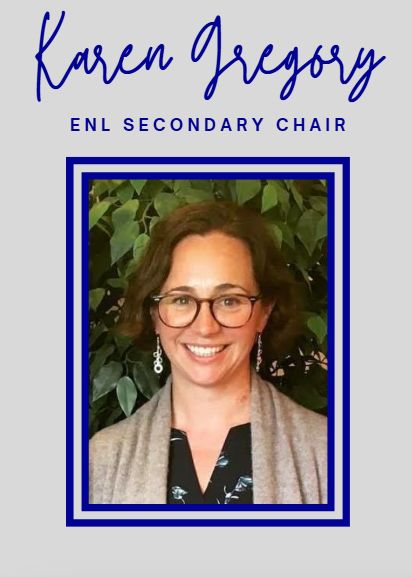

Dr. Karen Gregory and Pedro Rodriguiez share their second blog post as Co-Chairs of the Secondary ENL Educators Special Interest Group (SIG). They will highlight different co-teaching models that can be used at the secondary level.
Happy October!
This month we wanted to highlight different co-teaching models that can be used at the secondary level. Here are the titles of 5 different co-teaching models that can be used by content and ENL teachers. This information comes from the text “Co-Teaching for English Learners: A Guide to Collaborative Planning, Instruction, Assessment and Reflection” by Maria G. Dove and Andrea Honigsfeld
Co-teaching models
Model 1
One group: One leads, one “teaches on purpose”
Description: One teacher leads while another supports a small group/circulates the room. The teacher circulating should have clear goals/expectations as they interact with each group or student. It’s important to note that the lead teacher should not always be the content teacher but also the ENL teacher.
Variation: Two lead, two support small group/circulate room.
Example: In this model, one teacher will take on the lead role and they can model an activity or procedure at the front of the classroom. The other teacher is in the position of “Teaches on Purpose”. This teacher can take on different responsibilities such as, circulate the classroom to ensure all students are completing the guided practice correctly, sit with a small group to provide direct support/feedback or clarify information.
Model 2
One group: Two teach the same content
Description: Both teachers will engage the entire class but each teacher will play different roles and have their own responsibilities in the lesson. One teacher can explain a topic verbally and highlight key vocabulary. The other teacher can engage students in analyzing images to better understand what was described by the co-teacher.
Variation: one front, one back
Example: In this model, teachers will engage all students together. However, each teacher will have separate roles. For example, a Social Studies teacher can explain the content objective which highlights what content they will master. Then the ENL teacher explains the language objective or explains what language skills and what vocabulary they will use to achieve the content objective. In this model, teachers should decide what part of the lesson they will teach and when.
Model 3
One group: One teaches, one assesses
Description: One teacher leads instruction while the other teacher circulates and collects formative assessment data or notes on student performance. This data can be used to adjust the current lesson or can be used to adjust upcoming lessons. Some ways to adjust the current lesson or upcoming lessons would be to create new groups for targeted support or understand what material may need to be retaught.
Variation: Rotation of teachers after collecting data.
Example: One teacher can lead a guided practice with students as the other teacher circulates to gather which students can follow along and are completing the task correctly. Also, the teacher assessing can gather data during the independent or student practice to identify which students need other support. This model can allow co-teachers to focus on specific areas of language or content and identify strengths and areas of needed growth.
Model 4
Two groups: Two teach same content
Description: Two groups are made and teachers teach the same content. Both teachers plan their lessons together and have the same high expectations and learning outcomes for all of their students. A clear benefit would be the small teacher to student ratio. When the two groups are made they should not be separated between ELLs and Non-ELLs. Instead, develop groups that are based on student needs and what will allow students to be most successful. In this model, students can rotate to the other teacher after a designated amount of time so that all students have worked with both teachers and all materials.
Variation: students rotate amongst teachers for different parts of a lesson.
Example: A Social Studies teacher could work with one group using an interactive whiteboard to provide the historical context of a topic. The teacher can deliver instruction using images and a brief text. While the ENL teacher can use manipulatives, images and total physical response to deliver the same information.
Model 5
Two groups: one preteaches, one teaches alternative information
Description: one teacher focuses on teaching background knowledge that will be needed for students to understand a topic while the other teaches content related to the topic and standard.
Example: Before learning about the American revolution, the ENL teacher preteaches vocabulary related to the topic with one group. The Social Studies teacher will lead an activity with the other group where they will investigate individual patriots and their impact on the conflict.
Update from VP of Communications:
Don’t forget about their professional development and networking opportunity for NYS TESOL members on October 26, from 4- 5:30 (online via Zoom) where they will facilitate a session devoted to the NYS move to WIDA assessments and what that means for educators this school year. Please register here for the event: https://www.viethconsulting.com/Calendar/moreinfo.php?eventid=230372